A customer walks into your showroom and asks for a dirt bike for adults. Which one do you show them? Engine size alone does not answer that question. A 125cc bike and a 300cc bike differ in weight, seat height, wheel size, transmission and, most importantly, the age range the manufacturer recommends.
Apollo’s dirt bike lineup spans 70cc, 110cc, 125cc, 150cc, 250cc and 300cc categories. This guide compares the actual models, so you can see which ones suit an adult rider, where the smaller bikes fit, and how to build an inventory that serves each customer without overlap.
All specifications below come from Apollo’s product pages for each model. Apollo notes that prices and specifications are subject to change without notice, so check the current page before you publish a listing.
Apollo’s Dirt Bike Range at a Glance
- 70cc: DB-21 and DB-25
- 110cc: DB-X4, DB-27, DB-28, DB-32 and DB-38
- 125cc: DB-X5, DB-X6, DB-X14, DB-X15, DB-X16, DB-X18, DB-X19, Thunder 125 and Thunder T20
- 150cc category: Thunder 140, Thunder 150 and Thunder 150 DLX
- 250cc: Thunder 250, Thunder 250 DLX and DB-36
- 300cc: Thunder 300 and Thunder 300 DLX
The 70cc and 110cc categories give a dealer variety at the entry level. This guide focuses on the 125cc to 300cc models, because that is where the adult-size question gets decided.
Start With Age Rating, Weight and Seat Height
Every Apollo product page lists a recommended age, a seat height, a weight and a maximum load. For adult customers, those four numbers matter more than the displacement.
| Model | Engine | Transmission | Seat Height | Weight | Max Load | Recommended Age |
| DB-X5 | 125cc | 4-speed | 30″ | 140 lbs | 165 lbs | 12–16 |
| DB-X19 | 125cc | 4-speed | 33″ | 174 lbs | 165 lbs | 12–16 |
| Thunder 150 | 140cc | 4-speed | 35″ | 177 lbs | 165 lbs | 13–18 |
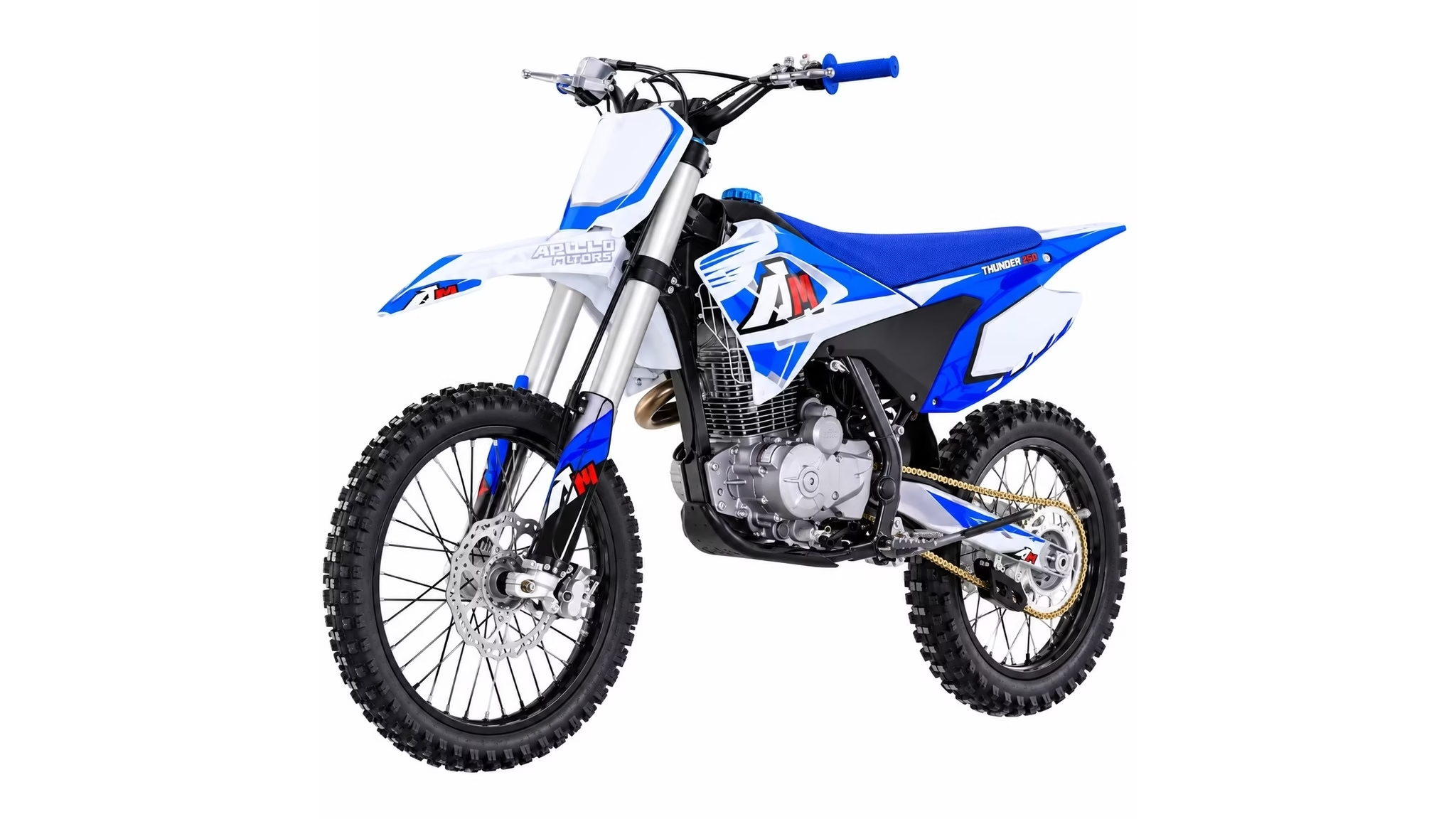
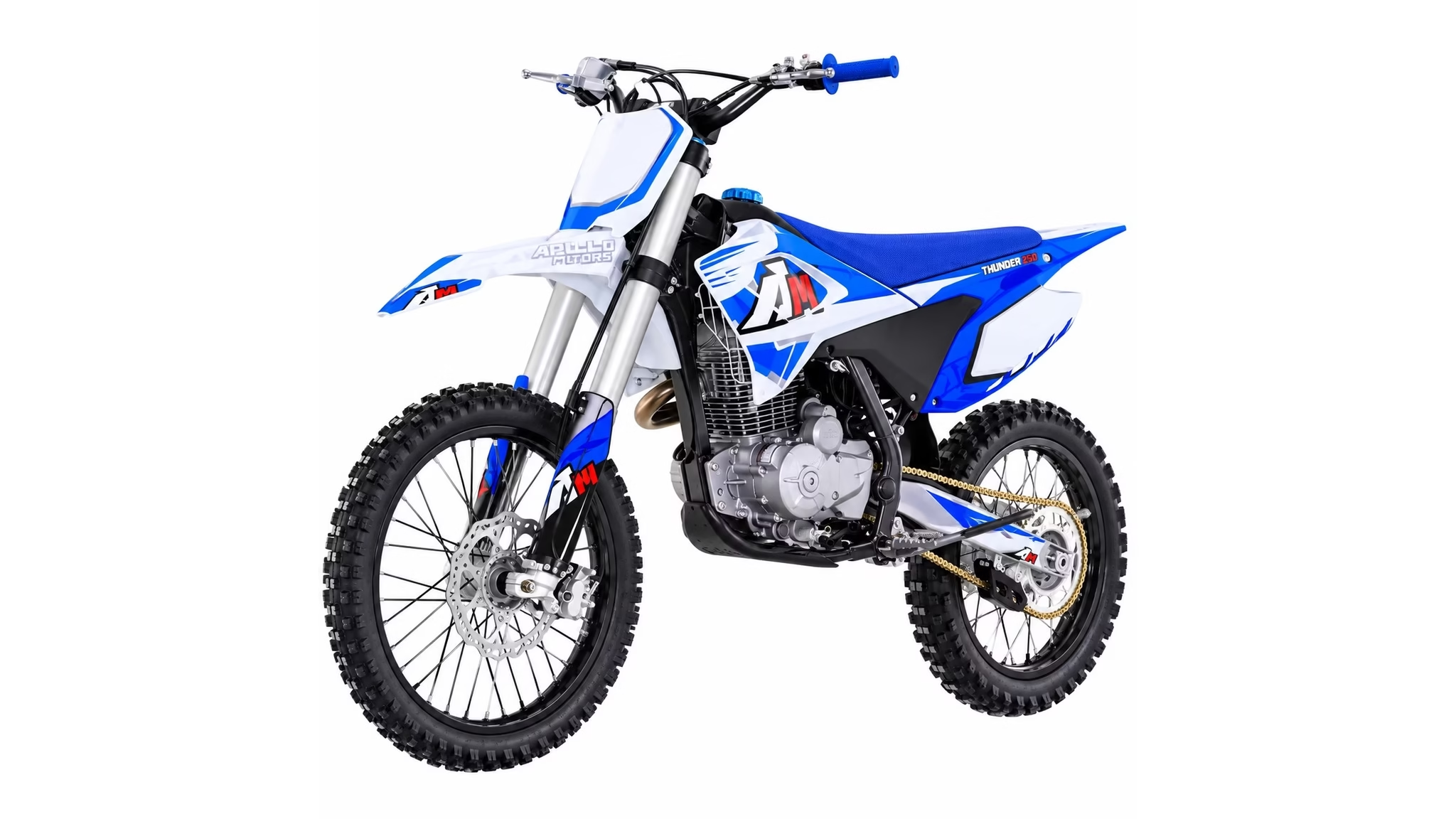
| Thunder 250 | 250cc | 5-speed | 36″ | 243 lbs | 200 lbs | 16+ |
| DB-36 | 250cc | 5-speed | 37″ | 265 lbs | 188 lbs | 16+ |
| Thunder 300 | 300cc | 5-speed | 37″ | 265 lbs | 200 lbs | 16+ |
The pattern is clear. The three 16+ models are the only ones in this comparison rated for adult riders, and they list a higher maximum load. The smaller bikes suit younger riders, so recommend them accordingly. Selling a youth-rated bike to an adult is a service and reputation risk, and the age rating gives your staff an easy, factual way to explain why a customer needs a larger model.
Reading the Numbers Like a Buyer
A spec sheet holds more than the headline figures. Four details are worth a second look when you stock adult-size bikes.
Seat height: The adult-rated models sit at 36 to 37 inches. The DB-X5 sits at 30 inches. Seat height shapes how a rider feels when stopped, so let customers sit on a bike before they decide.
Ground clearance: Clearance varies more than most buyers expect. The DB-X5 lists 9.4 inches, the DB-36 lists 11 inches, and the Thunder 250 and Thunder 300 both list 13.4 inches. A higher figure helps on rough ground, but it usually comes with a taller seat.
Weight: The jump from 177 lbs on the Thunder 150 to 243 lbs on the Thunder 250 is the biggest change in this range. Heavier bikes need more care during loading, assembly and display.
Fuel capacity: The DB-36 carries 8 L. The Thunder 250 and Thunder 300 carry 6.5 L. The DB-X19 and Thunder 150 carry 3.2 L. Tank size is a simple point customers understand quickly.
125cc Compared: DB-X5 vs. DB-X19
These two share a 125cc, four-stroke, air-cooled engine, a four-speed manual transmission and a kick start. Yet they are very different bikes.
DB-X5: 14-inch front and 12-inch rear tires, a 30-inch seat, 140 lbs and 9.4 inches of ground clearance. It carries 4.7 L of fuel.
DB-X19: 17-inch front and 14-inch rear tires, a 33-inch seat, 174 lbs and 12.8 inches of ground clearance. It carries 3.2 L of fuel.
Both list hydraulic front forks and hydraulic disc brakes. A dealer who stocks both covers two different rider sizes instead of duplicating a product. Wheel size also affects your parts stock, since the DB-X5 and DB-X19 use different tire sizes. Businesses evaluating this segment can review the Apollo 125cc Dirt bike dealer range when comparing available models. The range also includes the Thunder 125 and the DB-X14 through DB-X18.
The 150cc Category: Check the Listed Displacement
The Apollo 150cc category includes the Thunder 140, the Thunder 150 and the Thunder 150 DLX. One detail catches dealers out. The Thunder 150’s own specification lists a 140cc engine, with a four-speed manual transmission, kick start, 19-inch front and 16-inch rear tires and a 35-inch seat. Its recommended age is 13 to 18.
When you write listings or sales sheets, copy the displacement from the specification table. The category name and the engine size are not always the same number, and a mismatch can lead to customer questions.
250cc and 300cc: DB-36 vs. Thunder 250 vs. Thunder 300
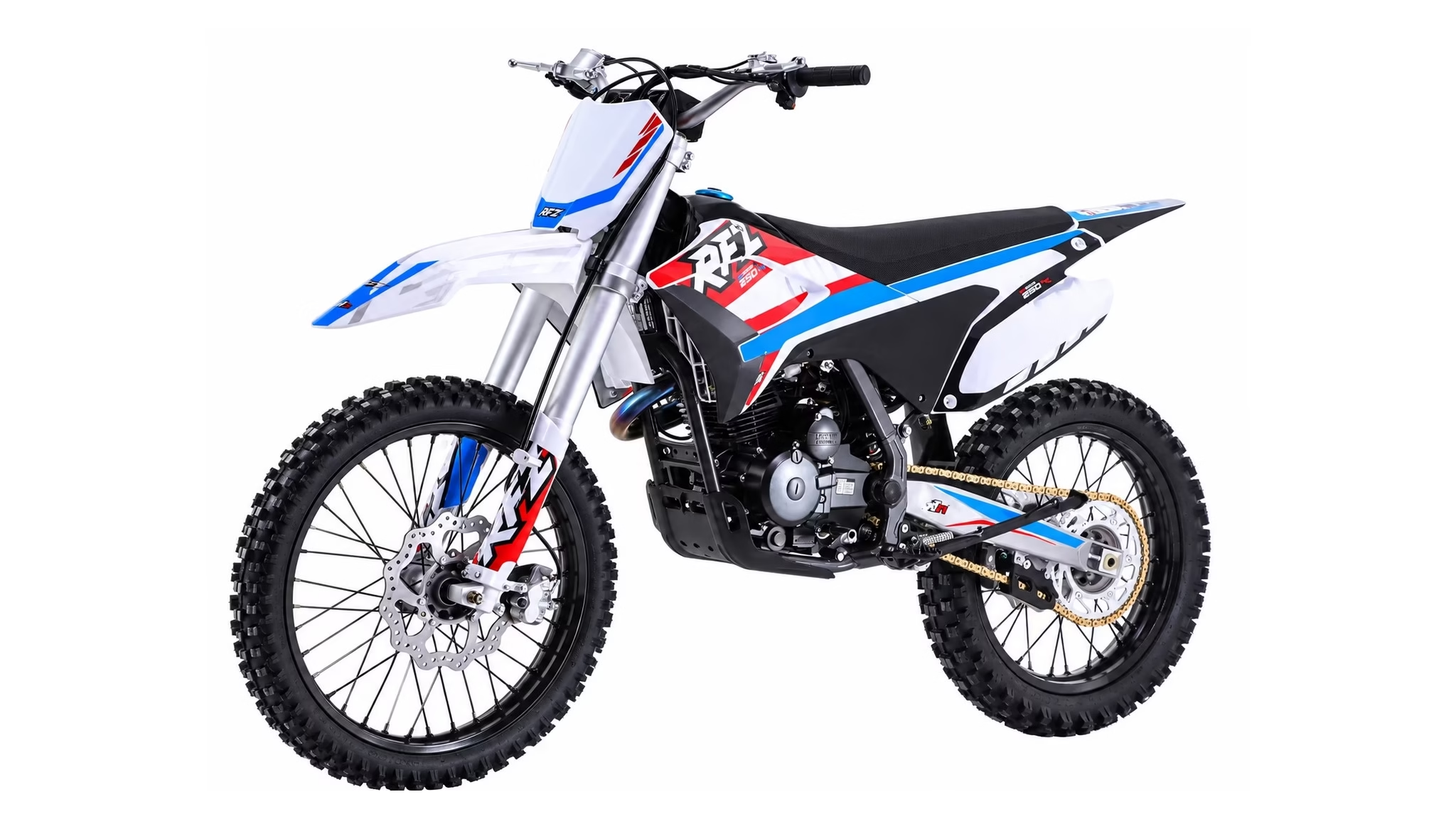
This is the adult-rated group. The Thunder 250, the DB-36 and the Thunder 300 all list a five-speed manual transmission, electric and kick start, hydraulic forks and disc brakes, and 21-inch front and 18-inch rear tires. The differences are in the details.
Thunder 250 vs. DB-36: The Thunder 250 is 22 lbs lighter (243 vs. 265 lbs), has a 1-inch lower seat (36 vs. 37 inches) and offers 13.4 inches of ground clearance against 11 inches. It also lists a higher maximum load, at 200 lbs against 188 lbs. The DB-36 has the larger fuel tank, at 8 L against 6.5 L.
Thunder 250 vs. Thunder 300: The Thunder 300 weighs 22 lbs more, has a 1-inch higher seat and a slightly longer wheelbase (53.8 vs. 52.8 inches). It lists a 62 MPH top speed against 53 MPH for the Thunder 250. Ground clearance, fuel capacity and maximum load are the same.
For many dealers, the Thunder 250 is the lightest adult-rated option. The DB-36 offers a bigger tank, and the Thunder 300 is the step up for customers who want more engine.
Why Start Type and Transmission Matter
The 125cc and 140cc models in this guide use a four-speed transmission and kick start only. The 250cc and 300cc models use five speeds and offer both electric and kick start. That affects what your staff tell customers at the counter, and it affects which parts you need to hold. The larger models list a 12V 9Ah battery, while the DB-X5, DB-X19 and Thunder 150 list none.
Parts and Service Support
Several Apollo product pages, including the DB-X19, DB-36, Thunder 250 and Thunder 150, offer a downloadable parts catalog. Check that the catalog for your model is available before you order, so your service team can identify wear items such as chains, brake components and tires.
Plan for the basics on every bike you sell: engine oil, air filters, chains and sprockets, brakes, tires, controls and fasteners. The product pages list a three-month warranty. Confirm the current terms with Apollo before you quote them to customers.
Building a Balanced Apollo Dirt Bike Range
You do not need every model. A practical range might look like this:
- A youth or teen entry point: The DB-X5 for smaller riders.
- A larger teen option: The DB-X19 or Thunder 150 for taller riders.
- An adult core model: The Thunder 250, with the DB-36 as an alternative for a bigger tank.
- A step-up model: The Thunder 300.
Each of these serves a different customer, so none competes with another. Add models only when they fill a gap, such as a rider size you cannot yet serve. An Apollo dirt bike dealer can use the available product range to compare different engine categories and model configurations when planning its inventory.
Wholesale Planning for Adult Dirt Bikes
Wholesale buying works best when each purchase has a clear job. Before ordering, ask what rider your next model serves and which gap it fills.
Businesses looking for Wholesale adult dirt bikes can review the available Apollo dirt bike categories when planning a commercial inventory range. Start with the 16+ models, then add the smaller bikes only if you also serve younger riders.
Space matters too. The Thunder 250 and Thunder 300 list larger overall dimensions than the DB-36 (80 × 32 × 45 and 81 × 32 × 48, against 74 × 20 × 37), and all three weigh over 240 lbs. Plan receiving, assembly and showroom space before the shipment arrives.
Before You Order
- Specifications: Copy numbers from the model’s specification table, not from the category name.
- Age and load ratings: Match each model to the rider, and do not market a youth-rated bike to adults.
- Space: Confirm you have room for receiving, assembling, displaying and storing units.
- Service: Check that your team can support the models you stock.
- Parts: Download the parts catalog where one is offered.
- Dealer terms: Review order quantities, shipping and warranty with Apollo.
Common Mistakes When Choosing Dirt Bike Inventory
Choosing by engine size only: Two 125cc bikes can differ in weight by more than 30 lbs and in seat height by 3 inches. Compare models one by one.
Ignoring the age rating: The recommended age is on every product page. Use it in your product records and in conversations with customers.
Copying category names into listings: A bike in the 150cc category can list a 140cc engine. Use the specification table.
Overlooking parts: Different wheel sizes and start systems mean different parts. Know what each model needs before you order it.
Making unsupported claims: Avoid statements about road use, certification or performance unless Apollo’s documentation supports them.
Final Thoughts
For adult riders, Apollo’s dirt bike range comes down to three models: the Thunder 250, the DB-36 and the Thunder 300. The smaller 125cc and 140cc bikes serve a different customer, and that is a strength when you stock them deliberately.
To discuss dealer opportunities or the wider Apollo powersports range, contact Apollo ATV for additional information.
Frequently Asked Questions
1. Which Apollo dirt bikes are rated for adults?
The DB-36, Thunder 250 and Thunder 300 list a recommended age of 16+. The DB-X5 and DB-X19 list 12 to 16, and the Thunder 150 lists 13 to 18.
2. What is the lightest Apollo dirt bike rated 16+?
Of the models compared here, the Thunder 250 is the lightest, at 243 lbs with a 36-inch seat.
3. How do the DB-X5 and DB-X19 differ?
Both are 125cc with four-speed transmissions. The DB-X19 has larger wheels (17-inch front, 14-inch rear), a 33-inch seat and 174 lbs of weight, against the DB-X5’s 14-inch and 12-inch wheels, 30-inch seat and 140 lbs.
4. Is the Thunder 150 a 150cc bike?
It is listed in Apollo’s 150cc category, but its specification lists a 140cc engine. Use the specification table when you write product listings.
5. What is the difference between the Thunder 250 and the Thunder 300?
Both use a five-speed transmission with electric and kick start. The Thunder 300 is heavier (265 vs. 243 lbs), has a taller seat (37 vs. 36 inches) and lists a 62 MPH top speed against 53 MPH.
6. Do the larger Apollo dirt bikes have an electric start?
The DB-36, Thunder 250 and Thunder 300 list electric and kick start. The DB-X5, DB-X19 and Thunder 150 list kick start only.
7. What should wholesale buyers check before ordering?
Check the age and load ratings, the specification table, parts catalog availability, warranty terms and Apollo’s dealer requirements.